Why Is the Islamic Symbol a Moon and Star?
The religion of Islam has a rich history that spans over 1,400 years, and with it comes a variety of symbols and imagery that represent its beliefs and principles. One such symbol that is often associated with Islam is the crescent moon and star. This iconic symbol holds significant meaning within the Islamic world and has a fascinating story behind its origins.
The Symbol’s Early Origins
The appearance of the crescent moon and star symbol predates the religion of Islam itself. In fact, it has been used by various civilizations throughout history, dating back to ancient times. The ancient Sumerians, Mesopotamians, and Persians all incorporated the crescent moon into their religious iconography.
During the medieval period, the crescent moon symbol gained prominence and began to be associated with the Islamic world. It is important to note that the symbol is not explicitly mentioned in the Quran, the holy book of Islam. Instead, it emerged as a popular symbol in Islamic civilizations through cultural influences and historical events.
The Ottoman Empire and the Crescent Moon
One of the key periods that solidified the crescent moon’s association with Islam was the expansion of the Ottoman Empire in the 15th century. The empire, led by the Ottoman Turks, utilized the symbol as a prominent motif in their official emblem.
The crescent moon became widely recognized as a symbol of the Ottoman Empire, representing its power, authority, and Islamic identity. This association was further reinforced as the empire expanded into new territories and spread its influence across vast regions.
The Connection to Islamic Calendar
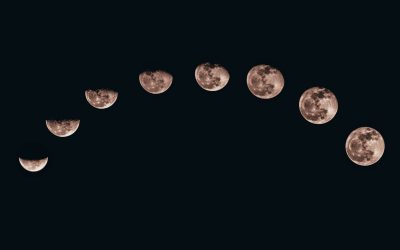
Another significant connection between the crescent moon and Islam lies in the Islamic calendar, which is based on the lunar cycles. Unlike the Gregorian calendar, which follows the solar year, the Islamic calendar follows the moon’s cycle of phases.
As the new month in the Islamic calendar begins with the sighting of the crescent moon, the symbol has become closely intertwined with the religious observance and the determination of important dates, such as the beginning and end of Ramadan.
Misconceptions about the Symbol
It is worth noting that the crescent moon and star symbol is often misunderstood as being a universal representation of Islam. While it does hold significance within certain Islamic communities, it is not universally recognized as the sole symbol of the religion.
The usage of the crescent moon and star symbol varies across different regions and cultural contexts. Some predominantly Muslim countries incorporate the symbol into their national flags, such as Turkey, Pakistan, and Tunisia. However, other Muslim-majority countries, like Saudi Arabia and Iran, do not include the symbol in their official emblems.
Alternative Interpretations
With any symbol, there are often different interpretations and meanings attached to it. While the crescent moon and star have primarily been associated with Islam, alternative interpretations have emerged throughout history.
In symbolism, the moon often represents femininity, intuition, and change. Some interpret the crescent moon and star symbol as a representation of these aspects, connecting it to the role of women and the importance of change within Islamic society.
Conclusion
The crescent moon and star symbol has become an iconic representation of Islam, largely due to its historical association with the Ottoman Empire and its connection to the Islamic calendar. While its origins predate Islam itself, the symbol holds significant cultural and religious meaning within the Islamic world.
It is important to remember that symbols can have multiple interpretations and may vary in significance across different regions and periods. The crescent moon and star, while recognized by many as an Islamic emblem, is not universally adopted or considered the sole symbol of Islam.
By understanding the historical context and cultural significance of symbols like the crescent moon and star, we can gain a deeper appreciation for the diverse and rich tapestry of Islamic art and religious iconography.