Understanding the Phenomenon: Full Moon and No Moon Explained
As we gaze up at the night sky, the moon’s ever-changing phases never fail to captivate us. From the enchanting full moon, illuminating the darkness with its graceful glow, to the mysterious no moon, shrouding the night in obscurity, these celestial events have sparked curiosity and wonder throughout human history. In this blog post, we delve into the mechanisms behind the occurrence of full moon and no moon, shedding light on these mesmerizing lunar phases.
The Lunar Cycle: A Dance of Shadows and Light
Before we delve into the specifics of full moon and no moon, let’s take a moment to understand the lunar cycle as a whole. The moon, Earth’s only natural satellite, orbits our planet as both bodies journey through space. This perpetual celestial dance results in the lunar cycle, a continuous pattern of waxing and waning moon phases.
The lunar cycle lasts approximately 29.5 days and can be divided into eight distinct phases. These phases include the new moon, waxing crescent, first quarter, waxing gibbous, full moon, waning gibbous, third quarter, and waning crescent. Each phase signifies a different arrangement of the moon, Earth, and the sun, resulting in unique lighting conditions.
The Full Moon: A Celestial Light in the Darkness
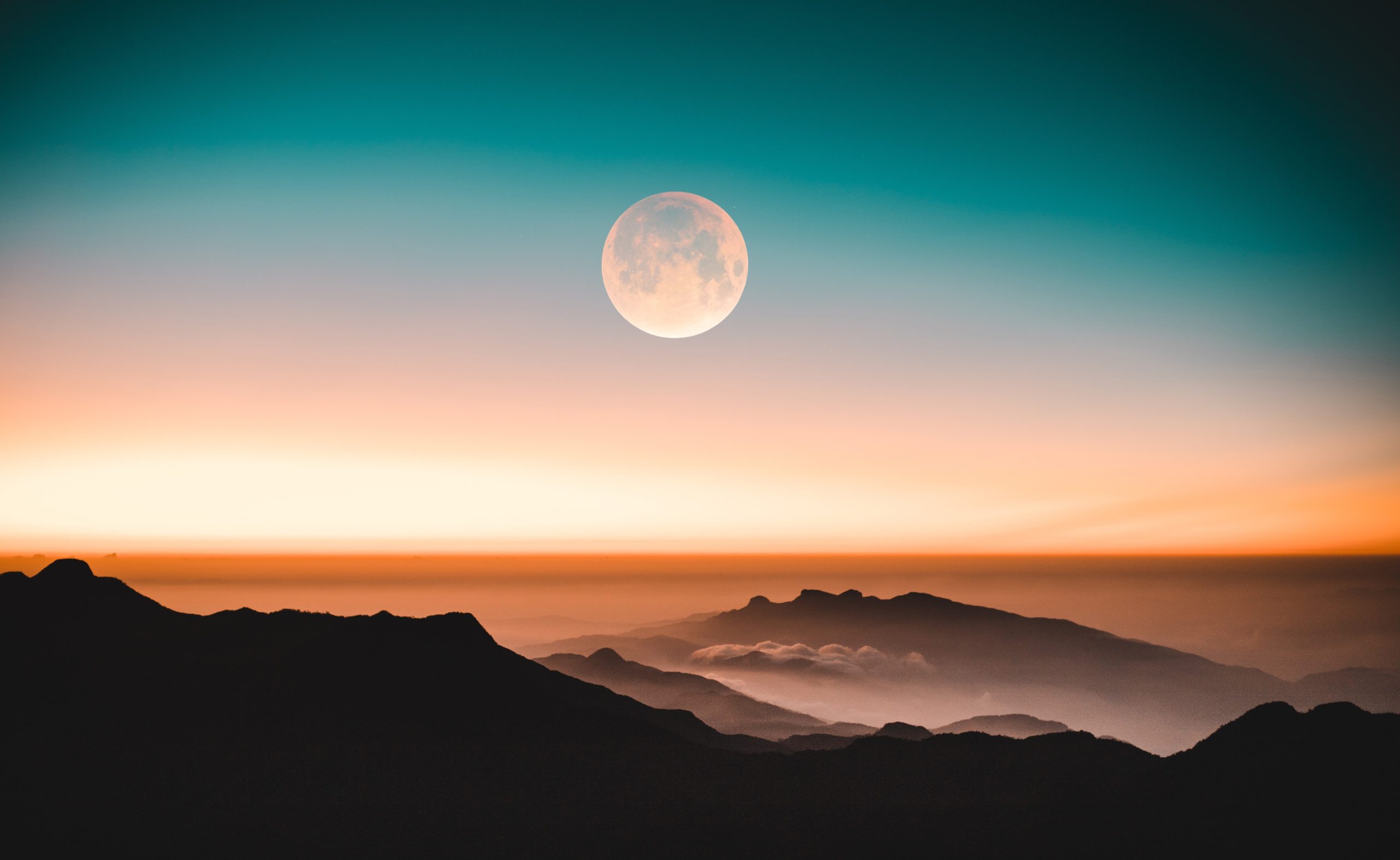
The full moon is perhaps the most iconic lunar phase, captivating us with its luminous beauty and captivating presence. This phase occurs when the moon and the sun are positioned on opposite sides of the Earth, with our planet located in between.
When the sun’s light shines directly onto the moon, its entire surface becomes illuminated. This alignment allows for the maximum reflection of sunlight onto the moon, creating a majestic spectacle in our night sky that can be enjoyed without any aid from telescopes or binoculars.
Although we often associate the full moon with a single night of brilliance, in reality, it typically lasts for several nights. The duration of the full moon phase varies due to the slight elliptical shape of the moon’s orbit, as well as the Earth’s position along its own elliptical orbit around the sun.
No Moon: A Night Shrouded in Mystery
Contrary to the awe-inspiring full moon, the no moon phase, also known as the new moon, presents a starkly different spectacle or rather, the absence thereof. During the no moon phase, the moon is situated between the Earth and the sun, resulting in its unilluminated side facing our planet.
As the sun’s rays do not directly hit the side of the moon that we observe from Earth, the night sky remains relatively dark. It’s important to note that the moon is still present during the new moon phase, but its lack of illumination makes it nearly invisible to the naked eye.
While the no moon phase may lack the luminosity of the full moon, it can still be an enchanting time for stargazing and observing other celestial phenomena. The absence of the moon’s glow allows for enhanced visibility of stars, constellations, and even the faint remnants of the Milky Way.
The Influence of Moon Phases on Earth
Aside from their aesthetic appeal, full moon and no moon phases can also have tangible effects on our planet. Traditionally, full moons have been associated with various cultural and natural phenomena, inspiring myths, stories, and superstitions.
- Ocean Tides: Due to the gravitational pull of the moon on Earth’s oceans, full moons are often associated with higher tides, known as spring tides. Conversely, during no moon phases, or new moons, when the sun and moon’s gravitational forces are in alignment, the tides are lower, resulting in neap tides.
- Animal Behavior: Some studies suggest that particular animal behavior, such as fish feeding patterns or certain bird migrations, may be influenced by the lunar cycle and moon phases. However, this topic remains a subject of ongoing scientific research and debate.
- Human Physiology: While the idea that full moons can cause increased human psychological distress or alter human physiology is popular in folklore, scientific evidence to support these claims remains limited or inconclusive.
Embrace the Celestial Wonders
Whether witnessing the full moon’s ethereal glow or embracing the mystery of the no moon phase, these lunar phenomena continue to enchant and fascinate us. Understanding the mechanics behind full moons and no moons allows us to appreciate the intricate interplay of celestial bodies and their impact on our planet.
Next time you find yourself gazing at the night sky, spare a moment to marvel at the beauty of the moon, whether it is shining brightly or obscured in darkness. Let the wonders of the universe ignite your imagination, and continue to explore the countless mysteries of our remarkable cosmos.
Table of Contents