How Does the Moon Spin Around the Earth?
Have you ever looked up at the night sky and wondered about the moon’s mesmerizing movement? The moon’s graceful spin around the Earth has captivated humans for centuries. In this blog post, we will dive into the details of how the moon spins around our planet, unraveling the mysteries of its celestial dance.
The Moon’s Orbit
The moon, Earth’s only natural satellite, follows a near-circular orbit around our planet. This orbit is not a perfect circle but rather an elliptical path, which means that the moon’s distance from Earth varies as it travels. The moon completes one full orbit around the Earth approximately every 27.3 days, known as a sidereal month.
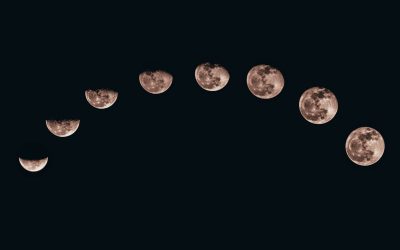
As the moon orbits the Earth, it also appears to move across the sky due to the rotation of our planet. This apparent movement results in the cycle of lunar phases, as we observe different portions of the moon illuminated by the sun.
Gravity’s Grasp
The primary force responsible for the moon’s orbit around the Earth is gravity. Gravity is the invisible, attractive force that exists between all objects with mass. In the case of the Earth and the moon, their masses and the distance between them determine the strength of this gravitational pull.
The moon’s orbit is governed by a delicate balance of gravitational force and the moon’s inertia. Inertia is the tendency of an object to resist changes in its motion. Without the presence of gravity, the moon would continue moving in a straight line but at a constant speed. However, the gravitational pull of the Earth continuously alters the moon’s path, causing it to follow a curved trajectory.
The moon’s speed, combined with the gravitational pull, creates a centrifugal force that acts as a counterbalance to gravity. This centrifugal force prevents the moon from falling directly into the Earth. Instead, it causes the moon to orbit around our planet in a circular-like pattern.
Tidal Forces
While gravity keeps the moon in its orbit, it also plays a significant role in the creation of tidal forces. Tides are the rise and fall of sea levels caused by the gravitational forces of the moon and the sun acting upon the Earth’s oceans. These tidal forces result from the difference in the gravitational pull experienced by different parts of the Earth.
The moon’s gravitational pull affects both the Earth and its oceans. The side of the Earth facing the moon experiences a stronger gravitational force, causing a distortion in the shape of the oceans. This creates a high tide on that side. On the opposite side of the Earth, the gravitational force is weaker, resulting in a second high tide. The areas between these high tides experience low tide.
The tidal forces exerted by the moon’s gravity create friction between the Moon and the Earth. Over time, this friction causes a transfer of energy from the Earth’s rotation to the moon’s orbit. Consequently, the Earth’s rotation slows down, and the moon’s orbit expands further away from our planet.
Tidally Locked: The Moon’s Synchronous Rotation
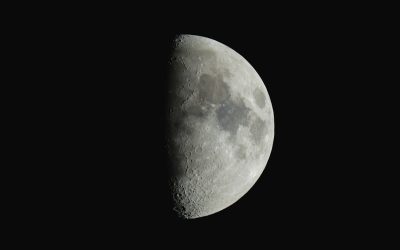
As the moon orbits the Earth, it experiences a phenomenon called tidal locking or synchronous rotation. Over time, the tidal forces have caused the moon’s rotation to slow down until it became synchronized with its orbit. This means that the moon always shows the same face to Earth, a phenomenon known as the “near side” of the moon.
The gravitational interaction of the Earth and the moon creates bulges in their respective shapes. On Earth, these tidal bulges result in the daily ebb and flow of ocean tides. Similarly, the gravitational forces distort the moon, causing it to bulge slightly on the side facing the Earth.
Over millions of years, these tidal interactions cause a transfer of rotational energy from the moon to the Earth. Consequently, the moon’s rotation has slowed down while moving further away from the Earth. At a specific point, the rotational energy lost equals the difference in the gravitational potential energy, resulting in tidal locking.
Conclusion
The moon’s spin around the Earth is the result of the delicate interplay between gravity, inertia, and tidal forces. The gravitational pull of the Earth keeps the moon in its orbit, while its inertia creates a centrifugal force that counterbalances the gravitational force. Additionally, tidal forces exerted by the moon’s gravity have caused Earth’s rotation to slow down and the moon’s synchronous rotation.
As you gaze at the moon in the night sky, remember the intricate dance it performs. It serves as a constant reminder of the awe-inspiring forces that shape our universe.