Does the Moon Have 8 Phases?
The moon, our celestial neighbor, has long been a source of fascination and wonder. Its ever-changing appearance has captivated human beings for millennia, leading to the development of various cultural and scientific explanations. One aspect of the moon’s transformations that often perplexes individuals is its phases. While many people believe that the moon has eight distinct phases, the reality is slightly more complex. In this article, we will examine the different lunar phases and explore why the moon does not have precisely eight phases.
The Lunar Cycle: A Brief Overview
Before delving into the specific phases of the moon, it is crucial to understand the lunar cycle. The moon takes approximately 29.5 days to complete one orbit around the Earth. Throughout this cycle, the moon goes through several phases as it interacts with the sun and Earth.
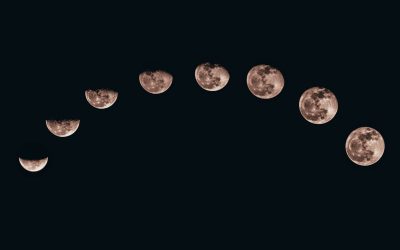
The lunar cycle begins with the New Moon, the phase in which the moon appears completely dark to observers on Earth. As the moon progresses through its cycle, it gradually becomes more visible, resulting in various phases, including crescent, half, and full. Eventually, the moon returns to its New Moon phase, completing the cycle and starting anew.
Commonly Recognized Moon Phases
While the moon exhibits an array of intermediate stages, several widely recognized phases are worth mentioning:
- New Moon: As mentioned earlier, the New Moon phase occurs when the moon is not visible from Earth. In this phase, the moon is positioned between the Earth and the sun, with sunlight primarily illuminating the side facing away from us.
- Waxing Crescent: The Waxing Crescent phase begins as a small sliver of the moon’s illuminated side becomes visible. This phase occurs immediately after the New Moon and proceeds until approximately half of the moon is visible.
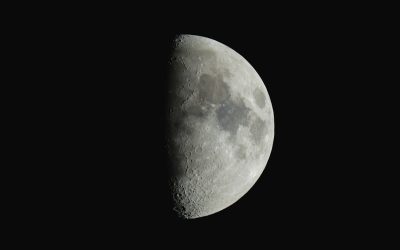
- First Quarter: At the First Quarter phase, the moon is half-illuminated, resembling a semicircle. It occurs when the moon has completed approximately one-fourth of its lunar cycle.
- Waxing Gibbous: Following the First Quarter, the moon progresses into the Waxing Gibbous phase. In this stage, the moon is more than halfway illuminated but has not yet reached its full brightness.
- Full Moon: The Full Moon marks the midpoint of the lunar cycle when the entire illuminated side of the moon is visible from Earth. Many cultural traditions and festivals are associated with the Full Moon.
- Waning Gibbous: After reaching its brightest point, the moon gradually enters the Waning Gibbous phase. Although still more than half-illuminated, it begins to lose brightness.
- Last Quarter: The Last Quarter phase is the opposite of the First Quarter. In this stage, the moon is again half-illuminated, but now it appears as a backward-facing semicircle.
- Waning Crescent: As the lunar cycle nears its end and approaches the New Moon phase, the moon enters the Waning Crescent stage. Only a small sliver of the moon is visible, gradually diminishing until it becomes completely dark again.
Why Does the Moon Have More Than 8 Phases?
The notion that the moon has precisely eight phases is a common misconception. While it is true that the eight phases mentioned above are the most notable and easily recognizable, the moon’s appearance during its cycle is in continuous flux. This variability arises due to several factors, including the moon’s elliptical orbit and the position of the observer.
Firstly, the moon’s orbit is not a perfect circle but rather an ellipse. This elliptical shape causes variations in the distance between the moon and Earth, resulting in subtle differences in the moon’s size and brightness throughout its cycle. Consequently, the boundaries between the recognized phases can become blurred as the moon transitions between phases at different distances from Earth.
Additionally, the position of the observer affects the perception of the moon’s phases. Depending on the viewer’s location on Earth, the angle at which sunlight hits the moon may vary, further altering its appearance. Observers in different hemispheres may also witness the moon’s phases in reverse order, as the perspective changes based on their location.
Intermediate Moon Phases
Beyond the commonly acknowledged eight phases, the moon exhibits numerous intermediate stages during its cycle. These intermediate phases include the Waxing Crescent, Waxing Gibbous, Waning Crescent, and Waning Gibbous stages. These intermediate phases, often referred to as “gibbous,” essentially indicate that the moon is more than a quarter but less than fully illuminated.
During these intermediate phases, the moon may appear slightly asymmetrical or partially illuminated as it progresses towards the next recognized phase. While these intermediate stages are not usually named or widely known, they play a crucial role in the overall lunar cycle and the moon’s continuous transformation.
Conclusion
While many individuals believe that the moon has precisely eight distinct phases, the reality is more nuanced. The commonly recognized eight phases provide a simplified framework for understanding the moon’s cyclic transformations. However, the moon’s appearance throughout its cycle is influenced by various factors, including its elliptical orbit and the position of the observer.
By appreciating the complexities of the lunar cycle and recognizing the existence of numerous intermediate phases, we can deepen our understanding and enjoyment of our celestial companion. The moon, with its ever-changing face, continues to inspire and captivate us, reminding us of the vast wonders of our universe.