Have you ever looked up at the night sky and wondered about the different phases of the moon? The moon goes through several distinct phases in its monthly cycle, each with its own unique appearance. In this beginner’s guide, we’ll explore the four major moon phases and learn more about what causes them.

1. New Moon
The moon starts its cycle with the New Moon phase. During this phase, the moon is positioned between the Earth and the sun. As a result, the side of the moon that faces the Earth is not illuminated, making it appear as a dark circle in the night sky.
This phase is often associated with the beginning of a lunar month and marks the starting point of the moon’s journey through its various phases.
2. First Quarter (Waxing Crescent)
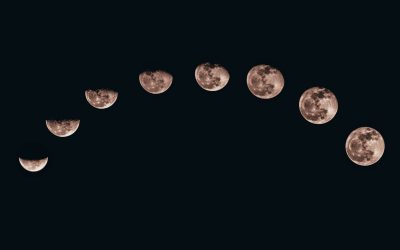
After the New Moon, the moon enters the First Quarter phase. During this phase, the moon has completed approximately one-quarter of its orbit around the Earth. As a viewer on Earth, you will see the right half of the moon illuminated while the left half remains dark.
This phase is known as the Waxing Crescent because the illuminated portion of the moon is slowly increasing in size as it progresses towards the next phase.
3. Full Moon
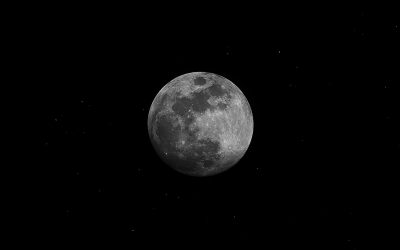
Perhaps the most recognizable and captivating phase of the moon is the Full Moon. During this phase, the moon is on the opposite side of the Earth from the sun, with its fully illuminated side facing us.
The Full Moon is associated with myths, legends, and folklore, often believed to have supernatural effects on human behavior. It is also the phase where the moon appears at its brightest, lighting up the night sky.
4. Last Quarter (Waning Crescent)
The Last Quarter marks the final major phase of the moon’s cycle. The moon has completed three-quarters of its orbit around the Earth, and only the left half of the moon is illuminated during this phase.
Similar to the First Quarter, the illuminated area gradually decreases, resulting in the Waning Crescent phase. This phase marks the transition back to the New Moon phase, completing one lunar cycle.
Conclusion
Understanding the four major moon phases – New Moon, First Quarter, Full Moon, and Last Quarter – allows us to appreciate the celestial dance happening in the night sky. Observing these phases not only connects us to the natural world but also offers us a chance to marvel at the beauty of our universe.
Next time you take a moment to gaze at the moon, pay attention to its phase and appreciate the cycle it goes through each month.